
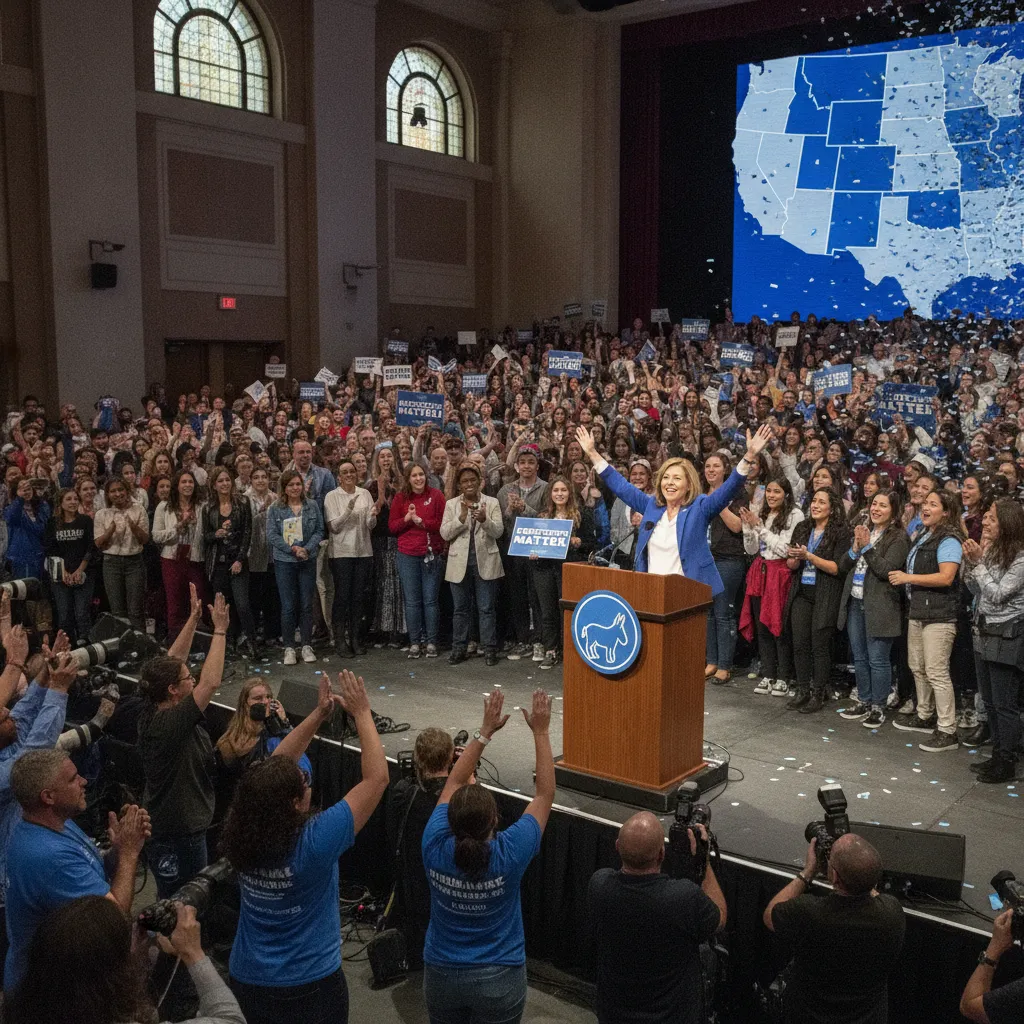
Democrats are entering the upcoming November elections with an appetite for a sweeping victory that could reshape the balance of power in Washington. Recent polling suggests the party might find success even in deep red territories that once felt completely out of reach, fueling hopes for a true blue wave. However, this optimism creates a precarious psychological landscape where anything less than total dominance across both chambers of Congress could be perceived as a failure by the Democratic base.
CNN senior political commentator David Axelrod notes that while Democrats are within striking distance in several key states, seizing control of the Senate remains a difficult climb. The path forward involves navigating a mix of purple battlegrounds like Georgia and Michigan alongside longshot opportunities in states such as Texas and Alaska. Because expectations have been set so high, the margin between celebration and disappointment may come down to just a handful of seats, leaving Republicans poised to claim victory simply by stemming the tide.
Historical precedent often works against the president’s party during midterms, making any ability to hold ground look like a win. For instance, President Joe Biden previously framed narrow losses in 2022 as a win for democracy because they avoided the predicted landslide. Conversely, Donald Trump has historically claimed triumph even when his party suffered significant setbacks, provided certain strategic goals were met. This dynamic ensures that regardless of the actual numbers, both sides will likely spin the results to fit their own narratives of success or betrayal.
The mathematical reality reveals a tightening race centered on a small number of tossup seats due to years of aggressive gerrymandering. While Democrats may only need to flip a few specific districts to reclaim House leadership, history shows that flipping both houses simultaneously is rare, occurring only twice in half a century. As candidates like Roy Cooper in North Carolina and Jon Ossoff in Georgia fight to maintain or gain momentum, the final result will determine whether this cycle becomes another historic shift or merely another example of polarized stalemate.