
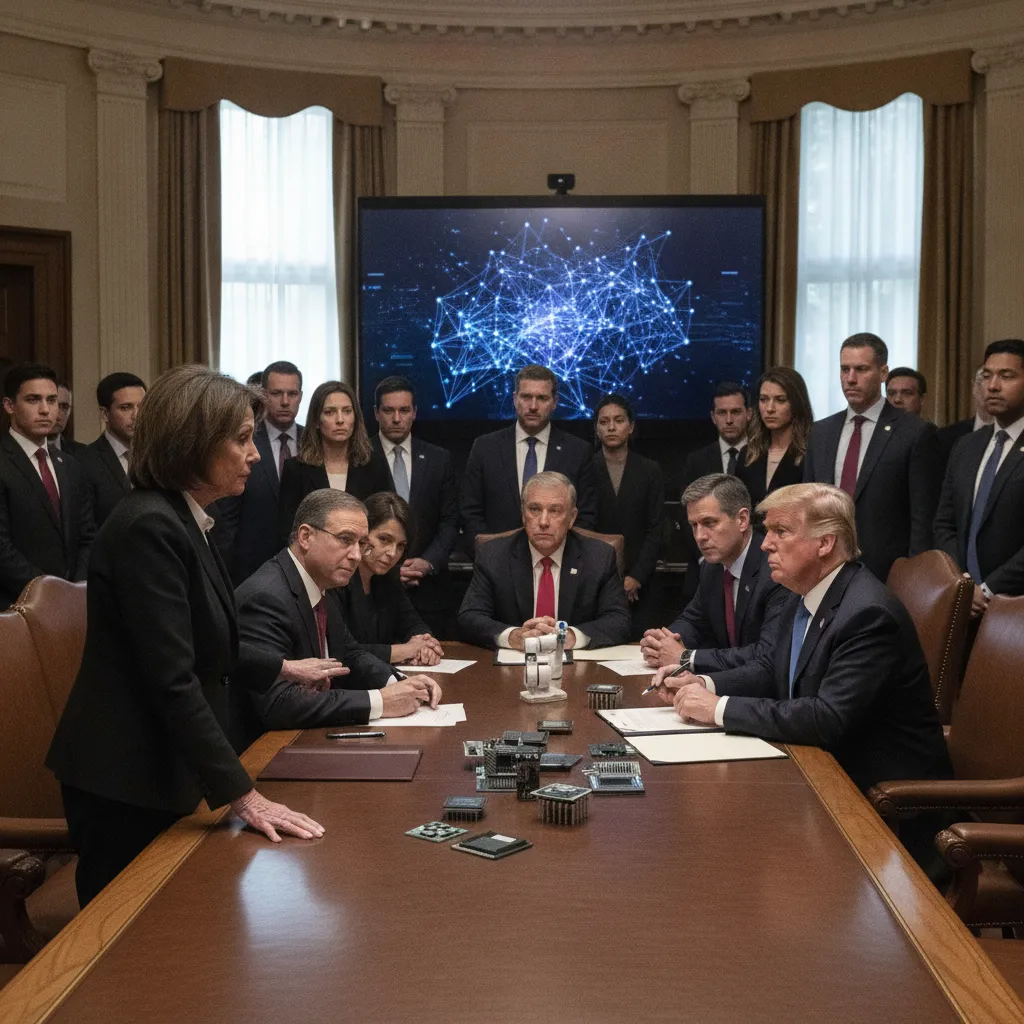
The recent midterm elections have handed Democrats control of both the House and Senate, creating a complex new dynamic for the rapidly expanding artificial intelligence sector. While President Trump continues to prioritize what he calls superintelligence through executive action and retains the power to veto federal laws, the shift in congressional leadership signals a move toward much stricter scrutiny. Policymakers are now focusing heavily on the hidden costs of the AI boom, specifically regarding massive energy consumption from data centers, cybersecurity risks, and the long term effects on the American workforce.
This tension is perhaps most visible at the state level, where Democratic wins in key regions could physically slow down the buildout of AI infrastructure. In places like Texas, where Democrats flipped several high profile offices, there are growing concerns that data center construction could face temporary pauses or increased demands to fund grid upgrades. Analysts suggest these regional hurdles might put a significant portion of projected capacity growth at risk over the next few years, potentially impacting semiconductor firms and cloud computing giants.
Despite these emerging roadblocks, industry experts believe that a total freeze on investment is unlikely because AI remains a critical strategic asset for both political parties. Companies are finding themselves caught between a desire to scale quickly and an evolving patchwork of state regulations concerning safety, bias, and copyright law. Rather than stopping their momentum, many business leaders argue that firms must establish their own rigorous internal governance standards to navigate this era of political volatility without halting innovation entirely.
Ultimately, while Democratic gains introduce fresh headwinds for tech providers and land developers, the broader appetite for AI integration appears resilient. Investors expect capital spending to remain robust through 2027, even as companies grapple with tighter credit markets and supply chain constraints. The coming months will likely be defined by a tug of war between an executive branch pushing for unchecked acceleration and a legislative body determined to impose guardrails on the digital frontier.