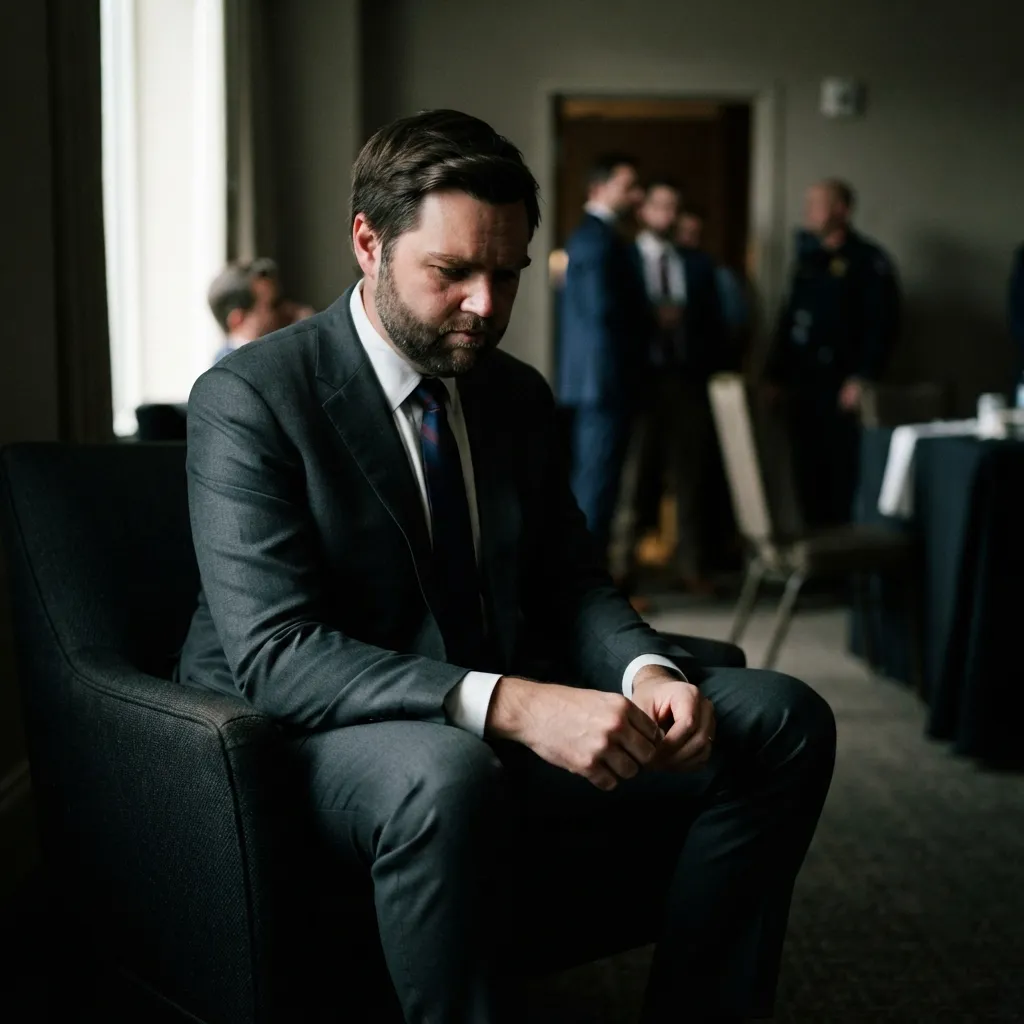

Vice President JD Vance is grappling with a profound identity crisis regarding his political trajectory following a devastating series of midterm election losses. Once viewed as the inevitable successor to Donald Trump, the forty two year old is now weighing whether a run for the presidency in 2028 is feasible or even desirable. Sources close to the vice president suggest that while a bid remains possible, he is privately wrestling with the collapse of the MAGA coalition and the personal demands of being a father to four children. For some of his advisors, the current political climate feels too toxic for anyone carrying the administration’s banner to succeed.
Much of this uncertainty stems from the ongoing war with Iran, a conflict that has eroded public trust and served as a primary catalyst for recent Republican failures at the polls. While Vance attempted to frame these losses through the lens of foreign policy in a recent social media post, reports indicate that his analysis irritated President Trump. This tension highlights a delicate balancing act for Vance, who must decide if he can realistically maintain his anti establishment credentials while occupying one of the most powerful offices in government, all while navigating the unpredictable temperament of his boss.
Despite these headwinds, some staunch allies argue that Vance is still perfectly positioned to dominate a future primary. They view him as the natural choice to lead what they hope will be a rebuilt populist movement, suggesting that two years provides ample time for political winds to shift. However, other high profile Republicans like Ron DeSantis and Ted Cruz are already circling, sensing vulnerability in what was previously seen as Vance’s reserved lane. These rivals represent a growing challenge for a man whose path to victory depends entirely on whether he can convince disillusioned voters that the Republican brand is still worth their trust.
Ultimately, Vance faces an uphill battle to resurrect a base that feels betrayed by broken promises on affordability and foreign intervention. With New White House Chief of Staff Stephen Miller sharing his vision for returning to core campaign promises, there is some optimism within the inner circle. Yet pollsters warn that simply tweaking the message may not be enough. To survive politically, Vance may have to move beyond being Trump’s protege and instead architect an entirely new version of populism capable of surviving in an era where traditional MAGA loyalty has begun to fade.