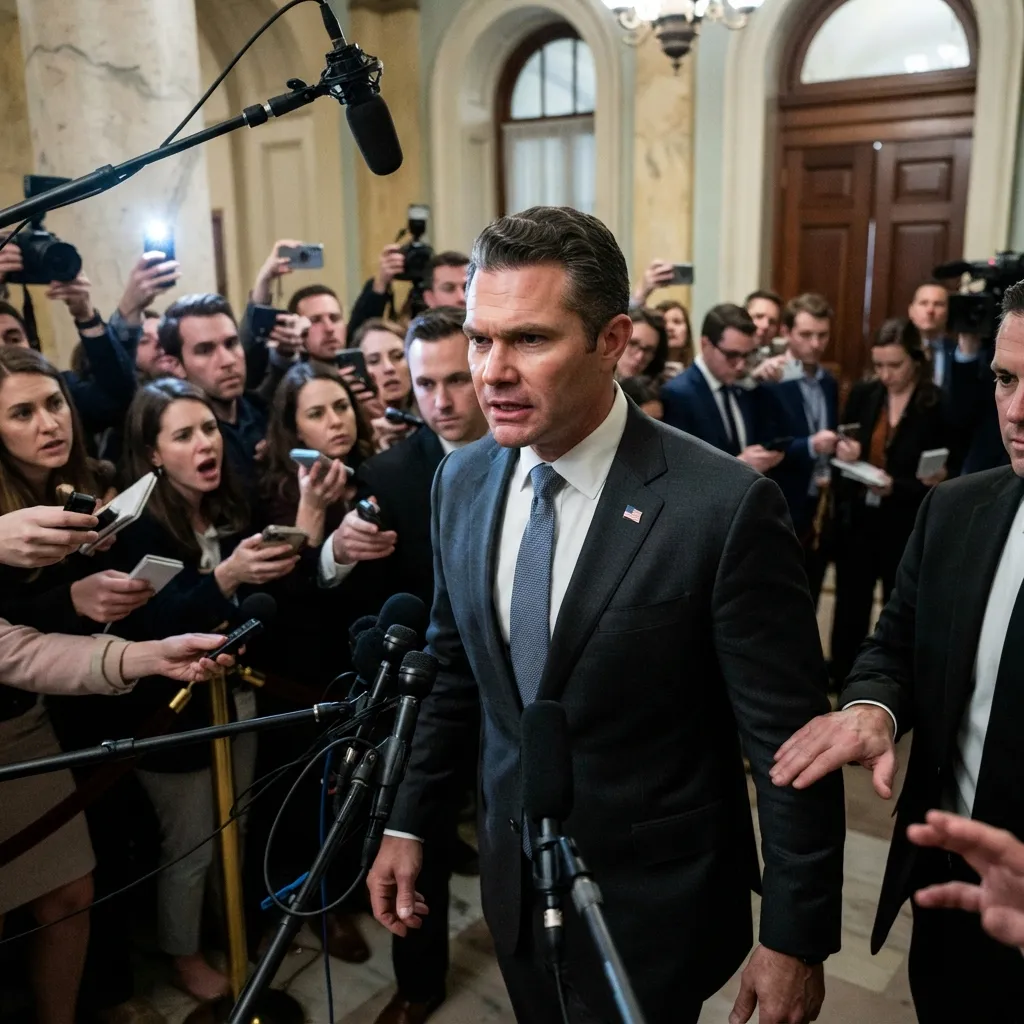
Secretary of Defense Pete Hegseth may have survived a recent bid for impeachment, but he remains firmly in the crosshairs as the political landscape shifts beneath him. While a narrow vote by the current Republican lame duck majority blocked the proceedings on November 10, the victory feels precarious. With Democrats poised to take control of both the House and Senate following a decisive midterm sweep, Hegseth enters a new era of oversight where his leadership of the war on Iran and controversial naval strikes in the Pacific will be scrutinized with renewed intensity.
The clouds gathering around Hegseth are fueled by allegations of international law violations, most notably the devastating bombing of an elementary school in Minab, Iran. Critics argue that while President Trump provides the broad strategic direction, Hegseth and his Pentagon team handle the lethal granularities, such as selecting specific targets for airstrikes. Former diplomatic officials suggest this makes him more than just an executor of orders, placing him at the center of decisions that have resulted in significant casualties and sparked widespread public backlash.
This tension is not limited to opposition parties; friction has leaked into the highest levels of the administration itself. Vice President JD Vance explicitly linked the Republicans’ poor performance in the midterms to the ongoing war effort, suggesting a growing rift over how these conflicts are managed. This internal instability mirrors historical precedents, such as when President George W. Bush replaced Donald Rumsfeld after similar midterm losses tied to unpopular foreign interventions in Iraq and Afghanistan.
Despite these pressures, Hegseth has adopted a posture of total defiance. In a recent address, he dismissed his detractors as deep state radicals engaging in political theater and vowed that neither he nor his policies would back down. By framing himself as a champion for the war fighter against bureaucratic interference, Hegseth is betting that presidential loyalty will outweigh congressional anger. However, with fresh Democratic majorities preparing to swear in soon, his survival may depend less on rhetoric and more on whether Congress decides to aggressively reassert its authority over U.S. military engagements.