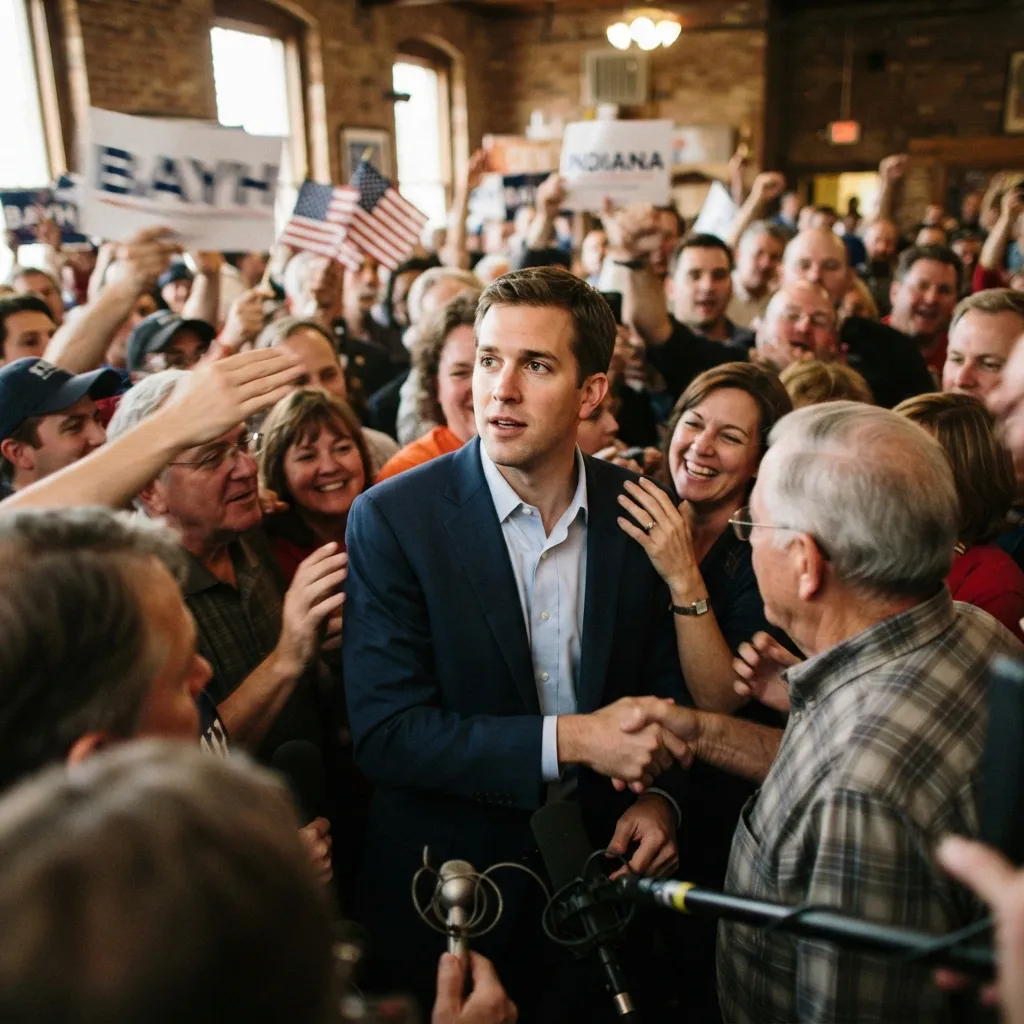
For years, Indiana has been regarded as one of the deepest shades of red in the American Rust Belt, a place where Democratic ambitions often felt like exercises in futility. That narrative shifted dramatically with the rise of Beau Bayh, a thirty-one-year-old newcomer who carries one of the most storied names in state politics. As the grandson of Senator Birch Bayh and son of former Governor Evan Bayh, Beau did more than just secure a victory in his first bid for office as secretary of state; he delivered a statistical shockwave that has left both parties questioning whether the state’s political alignment is shifting.
The scale of Bayh’s performance was staggering, marking a twenty-eight percentage point improvement over Donald Trump’s 2024 margin in the state. This surge wasn’t limited to city centers but bled into rural strongholds and traditional bellwethers like Vigo County, suggesting that a brand of moderate, familial prestige can still resonate with voters tired of ideological extremes. His victory anchored a broader Democratic wave that flipped a congressional seat and dismantled the GOP’s supermajority in the state House, providing a glimmer of hope for a party that hasn’t occupied the governor’s mansion in two decades.
High profile figures like Pete Buttigieg have pointed to these results as proof that no state is permanently lost when candidate quality is prioritized. With both a Senate seat and the governorship on the ballot in 2028, speculation is already mounting that Bayh will follow his father’s trajectory toward the executive office. While Republicans have attempted to paint him as a radical in disguise, his ability to peel away rural voters suggests he may be tapping into a widespread desire for pragmatic leadership rather than partisan warfare.
Even seasoned Republican strategists admit that while they view the Bayh legacy through a lens of opportunistic timing, internal GOP fractures could leave an opening wide open. Between potential primary challenges to Governor Mike Braun and an electorate increasingly frustrated with the status quo, Democrats believe they finally have someone capable of leading them out of the political wilderness. Whether this moment represents a temporary blip or a genuine realignment remains to be seen, but for now, the return of the Bayh name has turned Indiana back into a conversation piece for national strategists.