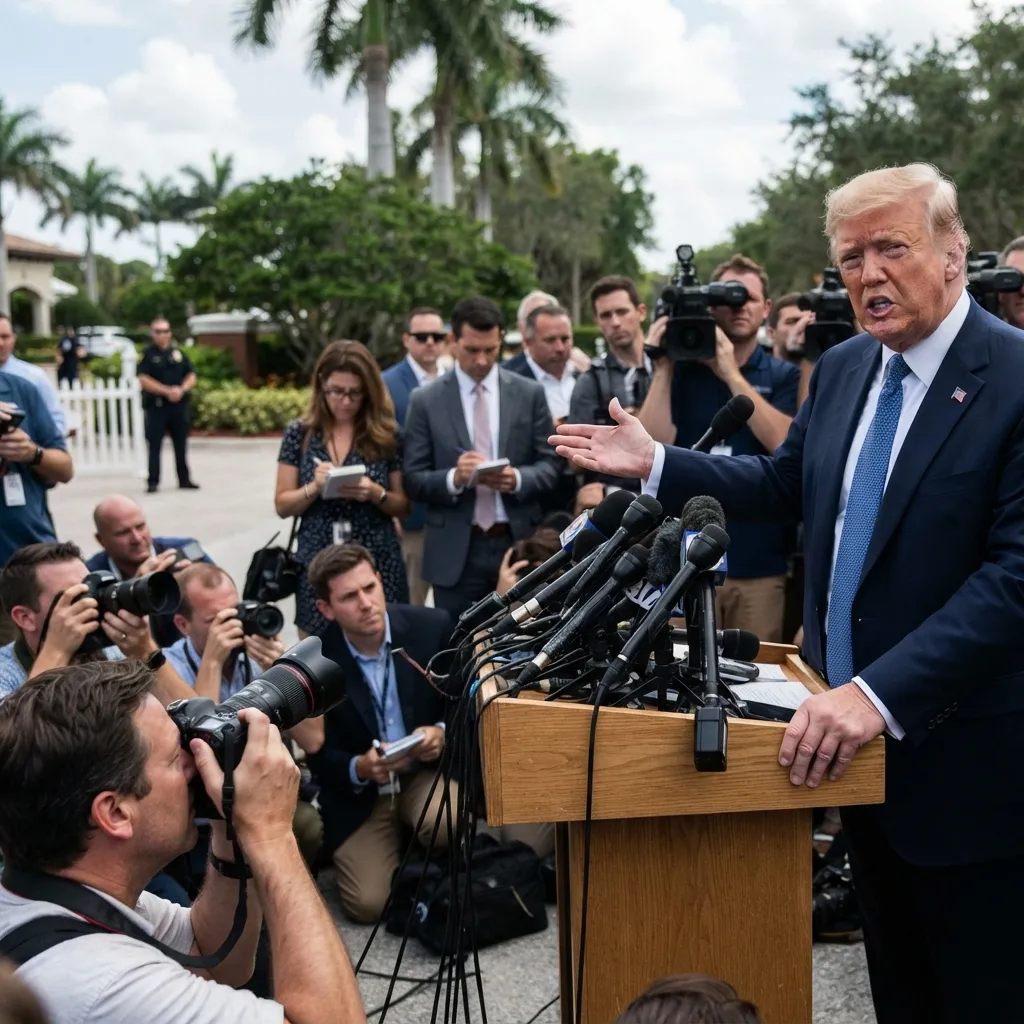
Donald Trump sparked a fresh controversy from West Palm Beach on Thursday, accusing the Commerce Department of intentionally releasing inaccurate economic growth figures leading up to the midterm elections. The former president took to social media to label the official data fake, claiming that a recent upward revision to the third quarter gross domestic product was proof of a purposeful error designed to mislead the public. He is now calling for an immediate investigation into why the corrected figures were not made available before voters headed to the polls.
The dispute centers on data released by the Bureau of Economic Analysis, which updated the quarterly GDP figure to 4.3 percent from an earlier estimate of 3.4 percent. While such adjustments are standard procedure for government agencies seeking greater accuracy over time, Trump suggested the timing was politically motivated. This rhetoric comes in the wake of Republican losses during the November elections, which saw Democrats seize control of both houses of Congress despite Trump’s insistence that his policies created a historic economic boom.
This incident follows a recurring pattern where Trump attacks the credibility of nonpartisan agencies when their findings clash with his narrative. Last year, he dismissed a weak jobs report as rigged and subsequently fired the head of the Bureau of Labor Statistics after employment numbers were revised downward. Critics argue that undermining these statistics threatens the stability of financial markets and complicates decision making for businesses and consumers who rely on objective federal data.
Despite his claims of strength, polling suggests many voters remain skeptical of his record. An AP Voter Poll indicated that more than three quarters of the electorate viewed current economic conditions poorly, while many attributed rising inflation directly to presidential policy. Interestingly, Trump omitted mention of another piece of data released alongside the GDP update showing that inflation had actually accelerated toward the end of October, focusing instead on the growth metrics that favored his agenda.