Grocery bills have been rising for years. Most forecasters have been calling for relief.
UBS is not one of them.
The bank just published an analysis arguing that food inflation will stay elevated for the medium to long term and that investors should position accordingly.
UBS called it “the end of cheap food.” The bank identified five structural forces it expects to keep food prices rising faster than general inflation:
- Climate shocks
- Higher labor costs
- Stricter animal welfare rules
- Strong demand
- Supply chain pressure
UBS said most of the resulting cost increases will be passed to consumers, Proactive Investors reported.
What UBS said about 5 forces driving food prices higher
Climate-related supply shocks are the largest factor. UBS said those shocks alone could add between 0.9 and 3.2 percentage points to food inflation.
Global heatwaves and a developing El Niño are increasing the risk of crop disruptions in 2026. Droughts and floods have already hit yields in major growing regions this year.
More Economy:
- Bank of America CEO warns inflation will back Fed into a corner
- Bank of America just made a strong call on inflation, economy
- Goldman Sachs says Americans may pay for the AI boom
Farmers are earning less per unit produced, and new investment in production capacity has slowed as a result.
Workers who plant, pick, pack, and ship food are being paid more than they were before the pandemic, and those wage increases show up in the price of bread, eggs, and produce at the checkout.
Meat and egg producers have new animal welfare and environmental rules to comply with, and compliance costs money.
Global demand for food is also rising, and supply is not keeping up. Logistics and regulatory costs across the food supply chain have not come back down.
UBS acknowledged that agricultural technology is improving. The bank said those productivity gains are real but are not arriving fast enough or at large enough scale to bring food prices down in the near term.
The five structural cost pressures are outrunning what technology is delivering right now.
What the current food price data show
The UBS view lines up with what government data are already showing. The USDA’s June 2026 report shows food-at-home prices, the grocery store index, were 2.7% higher in June 2026 than a year earlier.
Food-away-from-home prices were 3.4% higher over the same period, according to the USDA. The agency projects overall food prices will rise 3.2% for 2026, with grocery prices up 2.8% and restaurant prices up 3.6%.
Some categories are rising faster. Fresh vegetable prices were 11.9% higher in May 2026 than in May 2025. Those increases are landing on top of prices that are already well above pre-2021 levels.
Bloomberg reported in June 2026 that climate change is converting one-off weather shocks into recurring events, reducing the prospect of supply-side relief in any given season, Bloomberg reported. That is the same structural argument UBS is making.
Drago/Getty Images
What food inflation means for the economy right now
Restaurant spending is down. Food-away-from-home prices rose 3.4% in the year to June 2026. Grocery prices rose 2.7% over the same period. Restaurant spending is falling faster than grocery spending. Private-label product sales are up. Coupon and promotion use is higher. Non-essential food items are selling less. Shoppers are holding off until prices drop.
Food is part of the headline CPI basket. The Fed tracks it. Food prices at current levels are keeping overall inflation readings higher. The Fed has less room to cut rates as a result.
UBS said margins are already squeezed across the food supply chain. Most additional costs are being passed to consumers. The bank said that pass-through will keep happening. The five structural forces driving costs are not easing.
What persistent food inflation means for supermarkets and restaurants
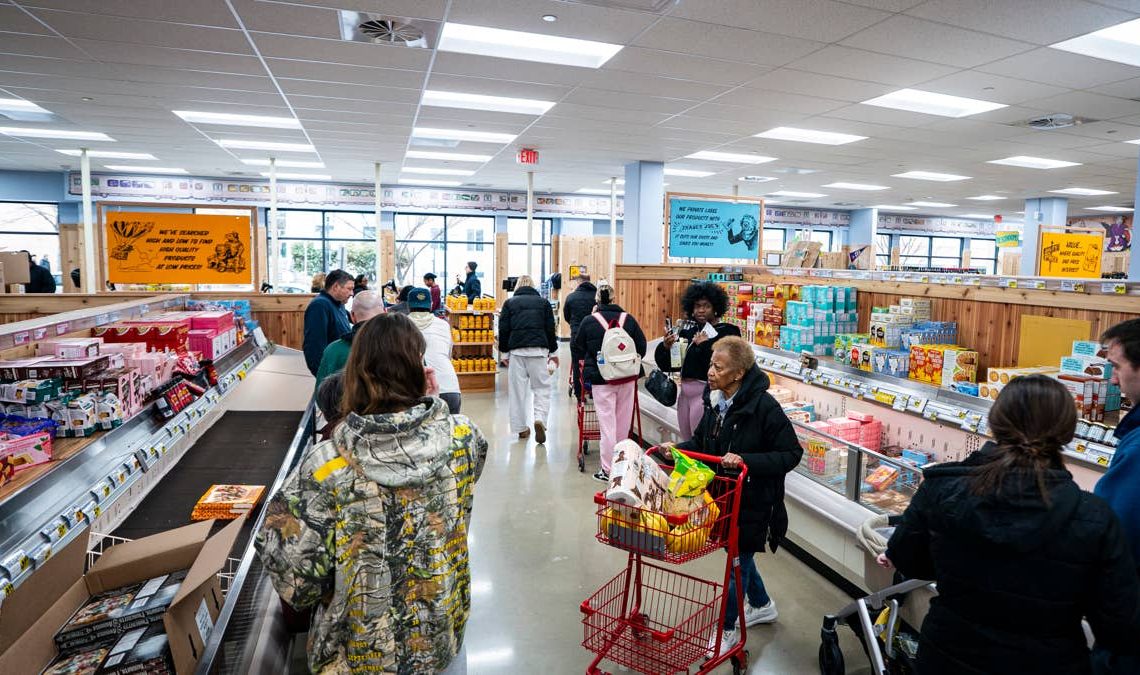
UBS said persistent food inflation is likely to benefit supermarkets. Grocery chains stand to gain as consumers shift more spending toward cooking at home. Higher food prices do not stop people from buying groceries, but they do stop people from eating out.
Restaurants are on the other side of that shift. When household budgets are under pressure from rising grocery bills, discretionary spending on restaurants and other nonessential categories pulls back. UBS said consumer spending on restaurants and other discretionary goods may decline as food inflation persists.
The split between supermarkets and restaurants reflects a broader pattern in how consumers respond to sustained cost pressure. Essential spending holds. Discretionary spending adjusts.
Food inflation keeps the essential category expensive while pushing consumers to cut back on the discretionary version of the same need.
Related: JPMorgan makes surprising S&P 500 call after inflation shock